
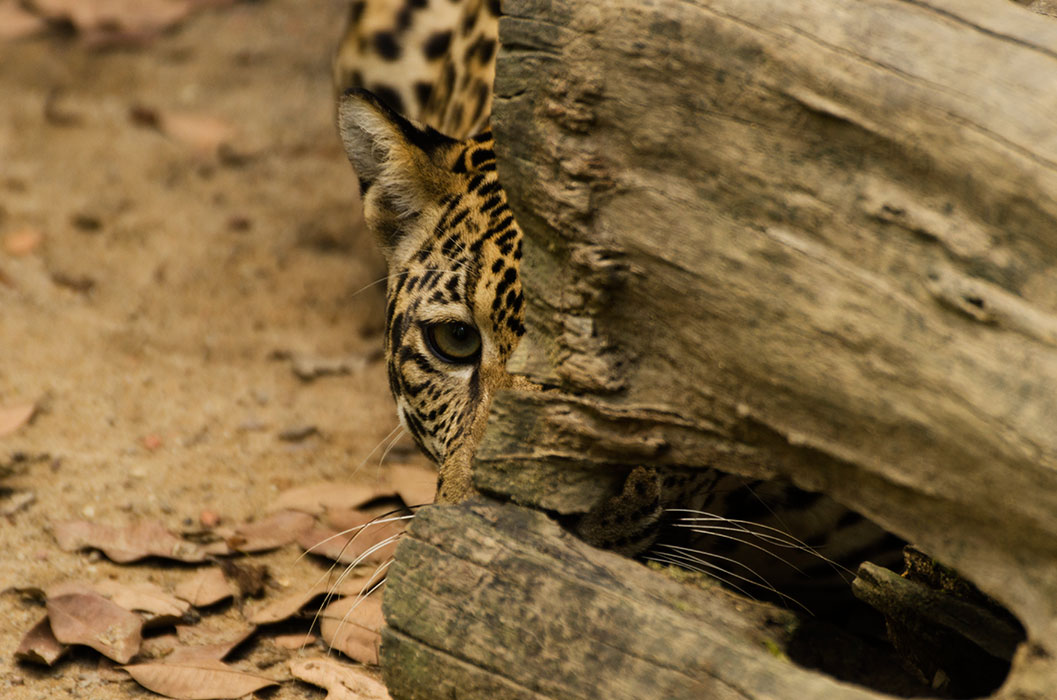
Two extraordinary ecosystems. Two completely different ways of encountering wildlife.
If you are planning a wildlife trip to Brazil, one question inevitably comes up: should you visit the Amazon Rainforest or the Pantanal?
For years, I have heard people in the travel industry say that the Pantanal is better for wildlife watching than the Amazon.
I used to feel uncomfortable with that comparison.
After spending more than two decades living, traveling and working in the Amazon, I knew how extraordinarily rich in wildlife this forest was. How could one of the most biodiverse ecosystems on Earth be considered a lesser wildlife destination?
Over time, however, I realized that the problem was not necessarily the statement.
It was the question.
The Amazon and the Pantanal offer fundamentally different ways of experiencing wildlife.
The Pantanal often makes animals easier to see.
The Amazon asks you to look differently.
And understanding that difference can completely change the way you experience the rainforest.
Quick Answer: Amazon or Pantanal for Wildlife?
If your main objective is to see large numbers of easily visible animals, particularly large mammals, the Pantanal will generally be the better choice.
Its open wetlands, grasslands and riverbanks provide much clearer sightlines than dense tropical rainforest.
But if you want to experience wildlife as part of an immense and complex rainforest ecosystem, the Amazon offers something completely different.
Here, wildlife watching is about more than counting sightings.
It is about learning to read the forest.
Why Is Wildlife Easier to See in the Pantanal?
The answer is surprisingly simple:
visibility.
The Pantanal is an enormous wetland composed of rivers, lagoons, grasslands, marshes and areas of forest.
Much of the landscape is relatively open.
Animals may be visible along riverbanks, across wetlands or around bodies of water. Species such as capybaras, caimans, giant otters and many birds can therefore be considerably easier to observe than animals hidden inside dense rainforest.
The Pantanal is also particularly renowned for opportunities to observe jaguars.
That doesn’t mean the Pantanal necessarily contains “better” wildlife.
It means the landscape often makes wildlife easier for us to see.
And that distinction matters.
Why Is Wildlife Harder to See in the Amazon?
Imagine standing inside a rainforest containing several layers of vegetation.
There are enormous trees above you, dense understory around you, vines, palms, branches and leaves everywhere.
Now imagine being an animal trying not to be seen.
The Amazon gives wildlife millions of places to disappear.
Many species spend much of their lives high in the canopy. Others are nocturnal. Some remain remarkably still. Many have evolved camouflage that makes them almost invisible unless you know exactly what you are looking for.
You may hear a group of monkeys before seeing them.
A guide may point toward a branch and you initially see nothing.
Then suddenly you notice a sloth.
Or a snake.
Or an owl.
And once your eyes learn what to look for, the forest begins to change.
Wildlife watching in the Amazon is a process of discovery.
The Amazon Is Not Empty. Quite the Opposite.
Difficulty seeing wildlife should never be confused with an absence of wildlife.
The Amazon is one of the richest biological systems on the planet. WWF estimates that the region contains about one in ten known species on Earth, and millions of species living there have yet to be scientifically described.
Jaguars live here.
So do river dolphins, giant otters, tapirs, sloths, monkeys, macaws, toucans, caimans, turtles, frogs, snakes and an extraordinary diversity of insects, fish and plants.
But the rainforest does not display them on an open stage.
You have to enter their world.
And for me, that is precisely what makes wildlife observation here so fascinating.
Wildlife Watching in the Amazon Is About More Than Sightings
One of the things I have learned over the years is that travelers often arrive with a checklist.
Jaguar.
Monkey.
Sloth.
Toucan.
Pink dolphin.
I understand that excitement. I still feel it myself.
But the rainforest gradually teaches you another way of observing nature.
You begin noticing tracks on the ground.
A broken fruit beneath a tree.
A movement in the canopy.
The call of a bird you cannot yet see.
The sound of howler monkeys traveling through the forest before sunrise.
The eyeshine of a tiny animal during a night walk.
A frog almost perfectly camouflaged against a leaf.
Suddenly, the question changes from:
“How many animals did I see?”
to:
“What is happening around me?”
That is a very different kind of wildlife experience.
Why a Good Naturalist Guide Makes Such a Difference
In the Amazon, your guide can completely transform what you see.
An experienced naturalist does much more than identify animals.
They listen.
They recognize alarm calls.
They understand feeding behavior.
They look for fruiting trees.
They notice tracks and signs.
They know which layer of the forest a particular species is likely to use and at what time of day it may become active.
Something that appears to be simply a wall of green to an inexperienced eye gradually becomes an ecosystem full of clues.
This is why we place so much importance on naturalist guiding at Amazon Emotions.
I don’t believe a guide should simply point at an animal and tell you its name.
A good guide helps you understand why it is there.
Local Knowledge and Science Belong Together
This is something I feel particularly strongly about.
Scientific knowledge is fundamental to understanding the Amazon.
Biologists, ecologists and researchers help us understand species, ecological relationships, population dynamics and the immense complexity of tropical ecosystems.
But there is another body of knowledge that is equally important.
The knowledge of people who have spent their lives in the forest.
Indigenous peoples and traditional communities can possess an extraordinary understanding of animal behavior, plants, seasons, rivers and subtle changes in the environment.
I believe some of the richest experiences happen when scientific knowledge and knowledge accumulated through generations of living in the forest meet.
One does not need to replace the other.
They can make each other stronger.
And tourism can help create opportunities for travelers to encounter both.
From Wildlife Watching to Citizen Science
My fascination with biology has always been part of my relationship with the Amazon.
I never became a biologist, although it was one of the things I dreamed of doing.
Instead, I have been fortunate to spend many years learning alongside biologists, naturalists, researchers and people whose lives are deeply connected to the forest.
Eventually, this curiosity became part of the way we design experiences at Amazon Emotions.
Through our Citizen Science initiatives, guests can do more than simply photograph the wildlife they encounter.
Observations can be recorded using platforms such as iNaturalist, helping document biodiversity while encouraging travelers to pay closer attention to what they are seeing.
A photograph of an insect suddenly becomes a question.
What species is it?
Where else has it been recorded?
What do we know about it?
What don’t we know?
For me, that curiosity is one of the most meaningful things tourism can inspire.
What Wildlife Can You See in the Brazilian Amazon?
Wildlife varies enormously depending on habitat, location, season, water level and simple luck.
Along the Rio Negro and in the surrounding rainforest, encounters may include:
- pink and grey river dolphins;
- several species of monkeys;
- sloths;
- toucans and macaws;
- kingfishers and birds of prey;
- caimans;
- turtles;
- frogs;
- snakes and lizards;
- bats;
- butterflies and other insects;
- an extraordinary variety of freshwater fish.
There are also jaguars, tapirs and other large mammals in the Amazon.
But these should never be treated as guaranteed sightings.
Wildlife is wild.
Responsible wildlife tourism should respect that.
Where Should You Look for Wildlife in the Amazon?
Another misconception is that “the Amazon” is one single habitat.
It isn’t.
Wildlife observation changes considerably depending on where and how you explore.
Rivers and Channels
Traveling quietly by boat can be excellent for observing river dolphins, birds, monkeys along the forest edge and aquatic wildlife.
Flooded Forest
During higher water, canoes can enter areas of igapó where the river literally flows through the forest.
Terra-Firme Rainforest
Walking beneath the canopy allows us to look for primates, birds, reptiles, amphibians, insects and the countless signs left by animals that may remain unseen.
Forest Canopy
Looking upward opens another world. Many Amazonian species spend much of their lives well above the forest floor.
At Night
When darkness arrives, the rainforest changes completely.
Frogs, insects, spiders, snakes and nocturnal mammals become active, while sounds that went unnoticed during the day suddenly dominate the forest.
For someone genuinely interested in biodiversity, night exploration can be every bit as fascinating as a large mammal sighting.
Amazon vs Pantanal for Wildlife Photography
If your main goal is photographing large mammals with unobstructed views, the Pantanal generally has a significant advantage.
Open landscapes and riverbanks provide clearer sightlines and can make it easier to spend time observing individual animals.
Photography in the Amazon requires a different approach.
Light beneath the canopy can be challenging.
Vegetation gets in the way.
Animals move behind branches.
Sometimes the subject is tiny.
But the photographic possibilities extend far beyond mammals.
Birds, amphibians, reptiles, insects, plants, fungi, flooded forests, reflections, mist, river landscapes and the immense architecture of the rainforest itself can make the Amazon extraordinary for photographers interested in nature rather than only iconic species.
Amazon vs Pantanal for Birdwatching
This comparison becomes much more interesting.
Both ecosystems offer exceptional birdwatching, but again the experience differs.
The Pantanal’s more open habitats can make birds easier to see and photograph.
In the Amazon, birdwatching often involves understanding different levels and habitats within the rainforest: river edges, understory, canopy and flooded forest.
You listen as much as you look.
For serious birders, the question is therefore not simply where there are “more birds.”
It is which ecosystem and species you want to experience.
So, Which Is Better: Amazon or Pantanal?
My answer today is different from the answer I might have given years ago.
Neither.
Because I no longer think they should be competing.
Choose the Pantanal if your priority is frequent, highly visible wildlife encounters, particularly large mammals, or if photographing iconic wildlife is the central purpose of your trip.
Choose the Amazon if you want to understand wildlife within the world’s great tropical rainforest, observing not only individual animals but the relationships between rivers, forests, plants, insects, birds, mammals and people.
And if wildlife is one of the great passions of your life?
Visit both.
The contrast will probably teach you more about Brazil’s biodiversity than choosing one over the other ever could.
Learning to See the Forest
Perhaps this is ultimately why I remain so fascinated by wildlife watching in the Amazon.
The forest makes us work a little harder.
It asks us to become quiet.
To listen.
To notice.
To accept that we cannot control what appears.
And then, every once in a while, something extraordinary happens.
A movement becomes a monkey.
A shadow becomes a bird.
A pair of eyes appears in the darkness.
Or a guide shows you a creature so small that you would have walked past it without ever knowing it existed.
The Amazon doesn’t always show you what you came looking for.
Sometimes it teaches you how to look.
And I think that can be even more valuable.
Frequently Asked Questions
Is the Amazon or Pantanal better for wildlife watching?
For travelers primarily interested in frequent and clearly visible wildlife sightings, the Pantanal generally has the advantage because its open landscapes make animals easier to observe. The Amazon offers a different experience centered on rainforest biodiversity, ecology and discovery.
Is it difficult to see wildlife in the Amazon?
Wildlife can be more challenging to spot because of dense vegetation and the height and complexity of the forest canopy. Experienced naturalist guides, patience and exploring different habitats and times of day can make a substantial difference.
Can you see jaguars in the Amazon?
Jaguars inhabit the Amazon, but sightings in dense rainforest are uncommon and should never be promised. Travelers whose primary objective is observing wild jaguars generally have better opportunities in the Pantanal.
What animals can you see in the Amazon Rainforest?
Depending on the region and conditions, travelers may encounter river dolphins, monkeys, sloths, macaws, toucans, caimans, turtles, frogs, reptiles, fish and an enormous diversity of insects and other wildlife. The Amazon is home to millions of species, many still undescribed.
Is the Amazon good for birdwatching?
Yes. The Amazon offers extraordinary bird diversity, although dense vegetation can make observation more challenging. Naturalist guides frequently use calls, habitat and behavior to locate species.
Can I combine the Amazon and Pantanal in one trip?
Yes. For travelers particularly interested in wildlife and biodiversity, the two ecosystems are highly complementary because their landscapes and wildlife-viewing experiences are so different.
Written by Vanessa Marino
Founder of Amazon Emotions · Naturalist · Conservation Advocate · Expedition Leader
For more than two decades, Vanessa Marino has lived, traveled and worked throughout the Brazilian Amazon, developing journeys that bring together wildlife, local knowledge, science and conservation.


