
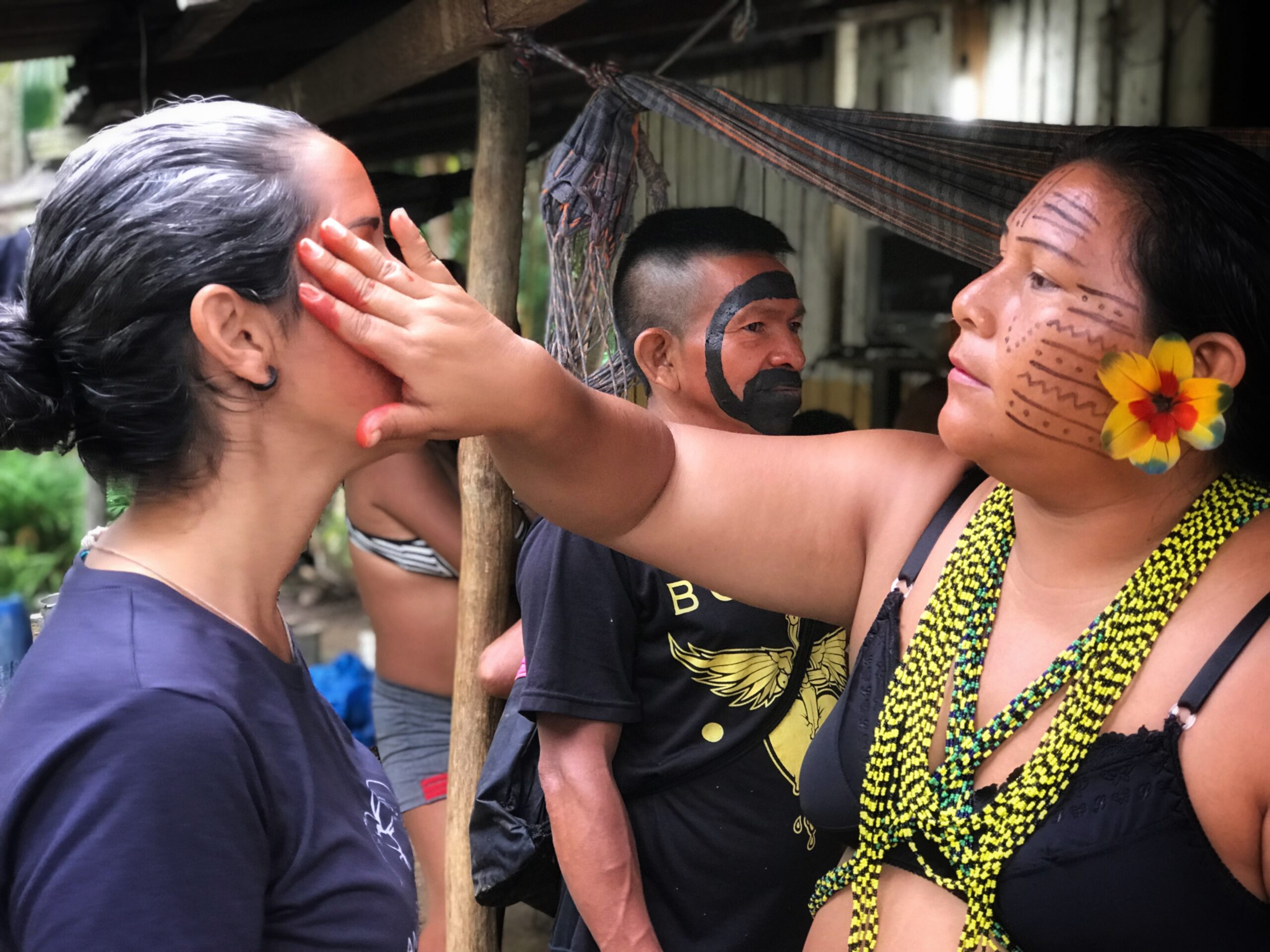
 The Netherlands-based international travel magazine WideOyster recently interviewed Vanessa Marino about her journey, passion for exploration, and commitment to the planet. Below is the republished version. The original article is available here. By Marco Baneveld
Travel requires a high level of goodwill, patience, and vision for tourism to positively impact the place and the people who live there.
At WideOyster, we couldn’t agree more with the wise words of our Travel Hero, Vanessa Marino.
Vanessa Marino was born and raised in Caracas-Venezuela, studied graphic design at the Faculty of Fine Arts and moved to Brazil in 1998 after traveling by bus from Mexico to Tierra del Fuego with a group of artists and environmental educators for two years.
At 19, she toured the Amazon rainforest and went on many photo expeditions, including one to a harpy eagle nest in the Jauaperi River. There, she was captivated by the indigenous people, wildlife, and lifestyle. Vanessa built her family’s home in Presidente Figueiredo’s rainforest in 2000 and focused on her bespoke tourist business.
Vanessa thrives when off-road in a 4×4 Toyota, trekking or rafting through the flooded jungle with the indigenous people of Rio Negro. Although it can sometimes be risky, she believes “the jungle is safer than the city”.
In addition to working for international television documentaries and periodicals, Vanessa is also a passionate lecturer on wildlife conservation, community-based tourism, transformative travel, and how travel can protect nature, benefit communities, and preserve cultural heritage.
Recently, she was invited to join Women Travel Leaders, a professional association consisting of inspiring and influential business owners, executives, influencers, journalists, managers, hoteliers, representatives, and directors from around the world.
Hello Vanessa. Where are you now and what are you doing?
Currently, I find myself seated on the veranda of my forest home, where I’ve resided for the past 25 years, enveloped by the tranquility of nature as I respond to your questions. This sanctuary serves as my haven, a place I invariably return to, to recalibrate my thoughts and orchestrate projects following extensive travels throughout the Amazon region.
Why do you travel?
I travel not merely to witness new landscapes or cultures, but to delve deeper into the essence of the places I visit. It is a journey of self-discovery, where the external exploration mirrors an internal one, leading me to confront my beliefs, expand my perspectives, and ultimately, find meaning and purpose in the positive impact we can create through tourism.
What has it brought you?
Travel has brought me a multitude of experiences, ranging from breathtaking natural landscapes to profound encounters with diverse cultures. It has expanded my worldview, challenged my assumptions, and enriched my understanding of humanity. Through travel, I’ve gained resilience, adaptability, and a deeper appreciation for the interconnectedness of our world. It has brought me moments of pure joy, profound insights, and lasting memories that continue to shape who I am.
Through travel, I’ve gained resilience, adaptability, and a deeper appreciation for the interconnectedness of our world.
How did travelling define you like a person?
Traveling has played a pivotal role in shaping my identity as a person. It has taught me the value of empathy, humility, and open-mindedness. Through exposure to different cultures, languages, and ways of life, I’ve learned to appreciate diversity and embrace unpredictability. Traveling has challenged me to step out of my comfort zone, confront my fears, and embrace uncertainty. It has nurtured a sense of curiosity and a hunger for knowledge, inspiring me to continually seek learning opportunities and personal growth, all while maintaining a good sense of humor.
Is there a good or bad way of travel in your opinion?
In my opinion, there isn’t a strictly ‘good’ or ‘bad’ way to travel, but rather a spectrum of approaches with varying impacts. However, there are certainly more responsible and ethical ways to travel that prioritize sustainability, cultural sensitivity, and respect for local communities and environments. Traveling with an awareness of one’s impact, supporting local businesses, engaging in culturally immersive experiences, and minimizing negative environmental footprints are all examples of positive travel practices. Conversely, traveling in a way that exploits communities, disregards cultural norms, or harms ecosystems would be considered less desirable. It’s about making conscious choices that prioritize the well-being of both the traveler and the destinations visited.
How do you contribute to preserve the environment?
At Amazon Emotions, we prioritize environmental conservation through various initiatives, such as reforestation, wildlife protection, and sustainable resource management at our accommodations Private Refuge and Manakin Riverboat. Additionally, we strive to minimize our impact on every itinerary.
These efforts aim to mitigate the impacts of climate change, protect biodiversity, and ensure the long-term health of ecosystems. In 2024, we established the Amazon Conservation and Biodiversity Institute (IBCAM) in cooperation with biologist Igor Yuri Fernandes to further our mission, integrating education, ecotourism, and scientific research. Each journey into the Amazon rainforest offers our guests unique learning experiences seamlessly woven into our conservation program by our specialized biologists and local guides.
What are the challenges that indigenous communities you work with face?
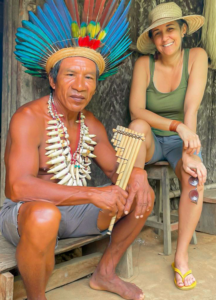 Indigenous and other local communities engaged in ecotourism confront a multitude of challenges, encompassing cultural preservation to sustainable development. These challenges include striking a delicate balance between sharing their culture with visitors while safeguarding its authenticity and integrity. Additionally, they must ensure that tourism activities do not adversely affect the natural environment upon which their livelihoods rely. Economic sustainability poses another hurdle, necessitating the management of tourism revenues to benefit the entire community and foster long-term economic stability. Moreover, empowering indigenous voices and ensuring their representation in decision-making processes regarding ecotourism development is essential.
By observing and engaging with indigenous communities, we can gain a deeper understanding of how-to live-in balance with the natural world and each other.
What can we learn from these communities?
We can learn invaluable lessons about resilience, harmony with nature, and the importance of cultural heritage. Their deep connection to the land teaches us about sustainable living practices and the significance of preserving biodiversity. Additionally, their communal way of life underscores the importance of cooperation and mutual support in facing challenges. Furthermore, their rich cultural traditions offer insights into alternative perspectives on life, spirituality, and human relationships. Overall, by observing and engaging with indigenous communities, we can gain a deeper understanding of how-to live-in balance with the natural world and each other.
Travel, especially ecotourism, plays a crucial role in protecting our planet and supporting local communities in several ways. Firstly, it contributes vital funding to conservation initiatives, enabling the safeguarding of natural habitats, restoration of ecosystems, and preservation of wildlife. This financial assistance encourages the preservation of biodiversity and promotes the adoption of sustainable practices by communities. Additionally, ecotourism provides alternative sources of income for local communities that are less harmful to the environment than industries such as logging or mining, fostering sustainable development and economic resilience. Through cultural exchange and immersive experiences, travelers develop a deeper understanding and appreciation for local cultures and traditions, contributing to the preservation of cultural heritage and the promotion of intercultural understanding. Furthermore, ecotourism offers opportunities for environmental education, encouraging travelers to adopt eco-friendly behaviors in their daily lives. When managed responsibly, ecotourism empowers local communities by allowing them to showcase their cultural heritage and participate in decision-making processes, ensuring they directly benefit from tourism revenues. Ultimately, ecotourism has the potential to foster a harmonious relationship between humans and the environment, where conservation efforts and economic prosperity coexist with cultural diversity and the preservation of natural ecosystems.
I strongly advocate for prioritizing responsible and sustainable tourism practices. This involves conducting thorough research on destinations and tour operators, selecting those that prioritize environmental conservation, respect for local cultures, and community engagement.
The Amazon boasts a unique way of life shaped by various factors, yet it remains relatively unknown to many. Now is an ideal opportunity to explore this environment up close, fostering greater empathy and understanding for why the world’s attention is focused on the Amazon. It’s a chance to connect with the cultural and natural richness that surrounds us, characterized by simplicity and generosity. With this in mind, we aim to provide a refined and high-quality experience to those who choose Brazil as their next holiday destination. This is our ultimate aspiration.


